The Healing Power of Authenticity & Acceptance: KPop Demon Hunters
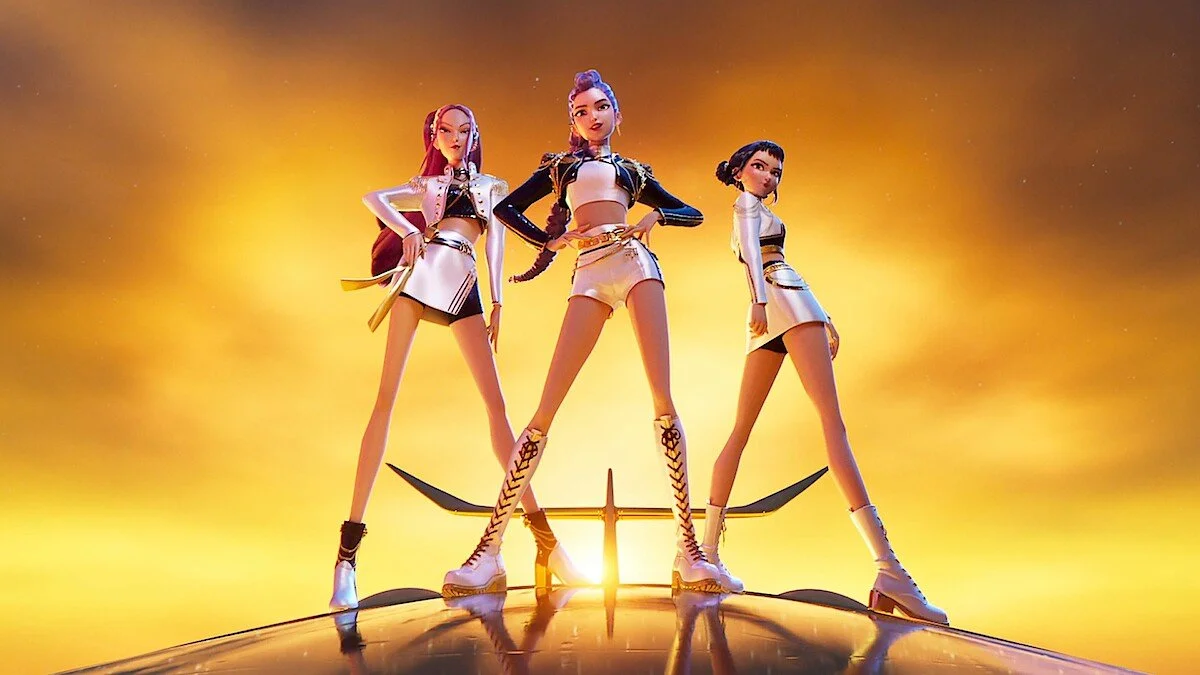
Image: Netflix
Spoilers coming your way! If you’re one of the few remaining people who have not seen this film - go see it now!!
Maggie Kang’s KPop Demon Hunters is a world-wide sensation, and that’s putting it mildly. The Netflix & Sony Pictures Animation production is a genius blend of infectious K-Pop music combined with a dramatic plot and heroic characters. The animated, child-friendly storyline revolves around a girl-group of demon-slaying warrior-singers saving the world from a treacherous demon boy-band trying to steal souls for their evil overlord. I first watched KPop Demon Hunters when my four-year-old daughter declared all her preschool friends had seen this movie and so she had to see it too - I was taken aback, thinking the movie was geared towards older kids; but after a quick IMDB research check, I agreed to let her see it, and - lucky for me! - we watched it together. We have now enjoyed this film numerous times, and it just keeps getting better. Plus, we love belting out those amazing songs!
KPDH’s themes of triumph of good over evil and love over hatred are universal across ages, countries, languages, and cultures - and more relevant than ever in our painfully divisive world. But reducing the storyline to these simplistic themes is a disservice, because what lies beneath is much more complex. KPop Demon Hunters is ultimately a story of how authenticity and acceptance enable healing from within, which in turn holds the power to heal far beyond ourselves.
This post will weave together themes from the film with the process of creating this film: because making niche works is never easy, and the themes of authenticity and acceptance, I believe, speak to why this movie has been so wildly successful - as in most viewed Netflix film of all time successful. Of course, no discussion of KPDH is complete without exploring the songs which, in my opinion, capture the essence of what this film is all about.
Rumi’s Story: “Our Faults and Fears Must Never Be Seen”
The main character in the film is HUNTR/X lead singer, Rumi. During the stunning song Golden we learn that Rumi (voiced by Arden Cho/songs performed by EJAE) - the child of a singer from the previous generation of Hunter/Singers - is half demon. No one knows, not even Rumi’s HUNTR/X costars, Mira (May Hong/Audrey Nuna) and Zoey (Ji-young Joo/Rei Ami), except for the Hunter/Singer who raised Rumi after her mother died, Celine (Yunjin Kim/Lea Salonga). Celine has long told Rumi to hide her demon ‘patterns’ until they disappear, which will only happen once all demons are slayed and the honmoon - or protective layer guarding the world from demons - is sealed. In Golden, Rumi says “I’m done hiding / now I’m shining / like I’m born to be” - only she continues hiding her patterns, terrified of the repercussions of being discovered.
The words “our faults and fears must never be seen” recur throughout the film - spoken by Celine, the HUNTR/X stars, and others to reinforce the idea that only perfection can conquer evil. Part of the authenticity of this film is that these standards of perfection are common in the KPop industry as well; in fact, EJAE, the singer for Rumi, was a k-pop trainee for over a decade who was ultimately dropped from training. EJAE has been open about the toll the k-pop industry takes on mental health, including seeing friends die by suicide due to the pressure to be perfect and discouragement of vulnerability; Arden Cho discusses the pressure of perfection also, from her perspective as an Asian-American. And in KPDH we see the toll it takes on Rumi, most notably losing her voice and being unable to hit crucial notes, as well as the burden of carrying the secret shame of her half demon heritage.
Shame & Manipulation
Gwi-Ma (Lee Byung-hun), the demon ruler, very literally feeds off of shame, and controls his demons with his voice - reminding them of their deepest insecurities to maintain his manipulative, abusive power. One of these demons, Jinu (Ahn Hyo-seop/Andrew Choi), is the lead singer of the Saja Boys, the demon k-pop group formed to further Gwi-Ma’s goals of destroying the honmoon. We learn Jinu’s story of shame and loss, and his constant state of depravation and disgust for his past choices, which fuel Gwi-Ma and his ability to control him. As the movie progresses, we learn that all the main characters experience shame in some capacity, another universal truth as none of us is truly immune from this feeling.
The depiction of Gwi-Ma as an amorphous voice of shame is so stunning because it is exactly how shame works, symbolizing how external “demons” represent the internal demons within us. The hypnotic control of shame is also breathtakingly portrayed; the power of shame exists when we are overtaken by it - controlled by it - which leads to a cycle of destruction towards ourselves and others. Sadly, this is not just fiction; shame fuels much of the violence in our world. However, when Jinu and Rumi meet, they slowly start to reveal their secrets and shame to one another and find themselves healing; Rumi is even able to recover her treasured signing voice. The song Free captures this beautifully:
Why does it feel right every time I let you in?
Why does it feel like I can tell you anything?
All the secrets that keep me in chains, and
All the damage that might make me dangerous
You got a dark side, guess you're not the only one
What if we both tried fighting what we're running from?
We can't fix it if we never face it
What if we find a way to escape it?
The Triumph of Acceptance
Shame experts sing this from the rooftops (just like Rumi & Jinu!): the antidote to shame is empathy, connection, love. KPDH directors, Maggie Kang and Chris Applehans, and the actors who voiced the HUNTR/X stars, discuss the power of vulnerability and how this combats shame in the film. They eloquently explain that no one is truly as alone as our shame may trick us into believing, and coming together - as Rumi, Mira, and Zoey ultimately do - is how we create something better, stronger, more real.
Indeed, Rumi is so fearful of losing herself, destroying the honmoon, that she sacrifices even her voice to hide her shame. But ultimately, she realizes the destruction of what she thought was safe is necessary to build something bolder. She draws on her own power, the power of her HUNTR/X family, and her connection with Jinu to fully own her flaws and fears, despite being taught to never do so, to stand up to the stranglehold of shame, ie. Gwi-Ma. My favorite song, What it Sounds Like, is an achingly beautiful portrayal of this journey. Copy/pasting the words here won’t do it justice - go listen to the song and come back to read the rest! It is in this scene that Jinu finally defeats his own shame demons, sacrificing himself to help Rumi defeat Gwi-Ma, along with the whole audience fully accepting themselves, connecting with one another, and trusting their own power. I won’t lie - I was in tears as the song ended. I can only dream of such a future for our own messy, beautiful world.
Authenticity Everywhere / The Power of Pop Culture
From small details such as what the HUNTR/X stars eat and wear, to larger questions of how to depict the singers as real girls and not just “pristine superheroes,” to South Koreans themselves embracing this film - every element of KPDH rings with authenticity. Hollywood has a long history of fear around stories that are culturally specific, and yet so many of these films have been successful by traditional Hollywood metrics. Universality and specificity go hand in hand, as I discuss in my previous post on The Farewell. And KPDH only underscores this phenomenon, transcending borders while remaining true to its very specific cultural context; it was at one point the top Netflix film in 90 countries!
Another theme that shines through is the non-duality of good/evil or right/wrong, a common concept in ‘Eastern’ cultures. This fascinating Reddit thread expounds on the many layers of ‘demons’ and the fealty of this film to these ideas; the relationship between Jinu and Rumi, initially adversarial but later, much more nuanced and complex, also flips the concept of hero/villain on its head. The theme of courage comes up frequently throughout the film and, to me, there is nothing more courageous than a major motion picture being brave enough to stay true to its cultural and spiritual roots, and refusing to oversimplify its storyline to satisfy a (false) ‘mainstream’ ideal.
One of my main motivators for creating this Journal series, and for my work as a psychological consultant in the entertainment industry, is because I believe fiercely in the power of stories to create meaningful change. In this interview, Arden Cho and EJAE are in conversation about the painful standards of perfection, the power of connection, and how their work on screen and on stage can change these patterns. (It’s another stroke of genius that the mark of a demon in KPDH is called ‘patterns’!) Research has shown how depictions of various mental health issues - including the ones shown here, such as shame, trauma, and healing - can be a force for transformation for individuals and public health. When creative works are authentic in these portrayals, the power to shift how we see mental health is further magnified.
**Notes: I have no notes. This film is perfect and I hope there will be more to follow, especially where we get to dig into Zoey and Mira’s stories further.
Going beyond the film to the real world, here are three final thoughts:
Shame plays an outsize role in our ever-violent world. From the recent school shootings - the latest in an unforgivably long, devastating string of school shootings - at Brown University, to the horrific antisemitic violence on Bondi Beach, gun violence has long been linked to shame and trauma. Here are two pieces with more details: Mass Shooters and Domestic Violence / Trauma and Violent Extremism.
It’s not only creative works where authenticity is craved and rewarded: politics is an arena where authenticity often seems unattainable. And yet, when there are individuals who are brave enough to hold true to their values and multi-layered identities, to dare to try something new despite everyone saying it can’t be done - it is wildly inspiring and hopeful. Today, Zohran Mamdani becomes mayor of my beloved New York City. Here are a few articles highlighting how authenticity, empathy, and connection played a role in his landslide - and to some ‘unlikely’ - win: Authenticity and Transparency / Empathy & Accessibility / Connection & Trust
I had the distinct honor of being invited to moderate a panel for the Academy of Motion Picture Arts & Sciences - ie. the Oscars - on this very theme of Authentic Mental Health Storytelling Through Filmmaking. The incredible panelists shared so much wisdom from their own experiences in the industry - I highly recommend you check out the recording if this topic resonates!